
Sponsored feature. Column sponsored by DT Hughes Group.
Construction has always been an industry built on resilience. Every day, thousands of men and women turn up to demanding sites, solve problems under pressure and overcome challenges most people never see. It prides itself on hard work, teamwork and getting the job done.
But alongside those strengths, the industry inherited another culture that went largely unquestioned for years: just crack on.
Many grew up believing that strength meant keeping problems to yourself. If life got difficult, you carried on. You didn’t complain. You certainly didn’t admit you were struggling. That attitude might get someone through a difficult day on site, but it can become incredibly dangerous when they are dealing with poor mental health.
Would people reach out?
Through his role with the DT Hughes Foundation’s Mental Fitness and Suicide Prevention Initiative, David Hughes has seen how much that culture has affected people across the industry, and what happens when it begins to change.
When the initiative launched, he knew there was a need. He had spent years meeting colleagues, subcontractors and friends carrying pressures nobody else knew about: financial worries, relationship breakdowns, addiction, anxiety and grief, hidden behind a brave face. What he didn’t know was whether people would actually reach out if support was available.
The answer has been overwhelming. Today, the initiative supports around 30 people every month through one-to-one conversations, group sessions and ongoing support. The need has always existed. The difference now is that people know there is somewhere safe to turn.
It often starts with one conversation
One of the biggest lessons is that mental fitness doesn’t always begin with professional intervention. Often, it starts with someone taking the time to ask how you’re really doing, and listening without judgement. Sometimes that single conversation can change everything.
Over the past year, David has met men who genuinely believed they had reached the end of the road, having carried life’s challenges alone for years until they couldn’t cope any more. He has also seen those same people begin to rebuild: overcoming addiction, reconnecting with their families, regaining confidence and returning to work with a renewed sense of purpose.
Recovery isn’t quick or straightforward. There are setbacks and difficult days. But every positive step deserves to be recognised, because progress is still progress.
Attitudes are changing
Conversations that once felt uncomfortable are becoming more common. More people understand that looking after your mental fitness should be no different from looking after your physical health. Nobody would expect someone to work through a serious physical injury without support, so why expect people to battle mental health challenges alone?
Leadership has a huge role to play. Mentally healthy workplaces aren’t just the responsibility of HR or mental health professionals. They start with the culture created every day:
- managers who check in with their teams;
- colleagues who notice when someone isn’t themselves;
- workplaces where people feel safe enough to say, “I’m struggling.”
That isn’t weakness. It’s courage. What David is proudest of isn’t the number of people supported, but the courage of those who stepped forward and asked for help, helping to change the culture for everyone who follows. He is equally grateful to every volunteer and colleague who gives their time to listen and stand alongside others.
“Real strength has never been about suffering in silence. It’s about knowing that asking for help is one of the bravest things you’ll ever do.”
David Hughes is a Power of Men columnist. dthughes.co.uk
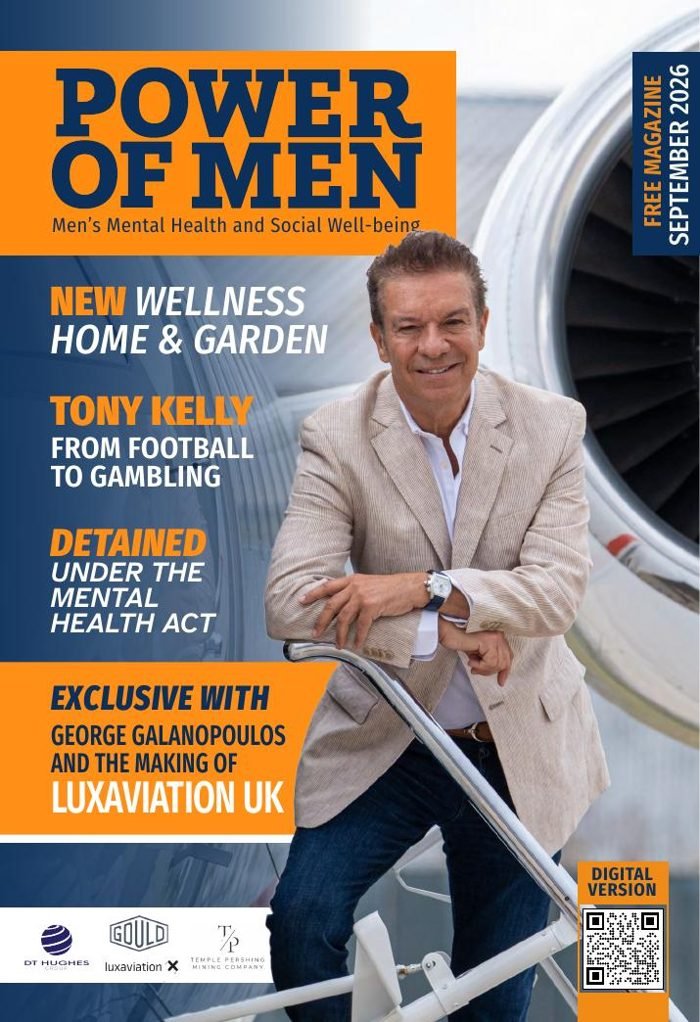
From the September 2026 issue of Power of Men, pages 18 to 19.
Need to talk?
Samaritans: 116 123, free, any time
Text SHOUT to 85258
NHS: 111
Emergency: 999
The Power of Men Advisory Board consists of a multi-disciplinary panel of experts in psychology, physical health, and accessibility design, ensuring every article is grounded in clinical evidence and neuro-inclusive standards. Meet the Advisory Board.
Need to talk?
Samaritans: 116 123, free, any time
Text SHOUT to 85258
NHS: 111
Emergency: 999
Get the monthly briefing