

For many men, alcohol isn’t just something we drink to celebrate. It’s something we turn to when life becomes overwhelming.
A stressful week at work. Financial pressure. Relationship problems. Grief. Loneliness. Anxiety. Depression. We tell ourselves we’re “just having a few beers” to unwind. But what often starts as a way of coping can slowly become the very thing making our mental health worse.
Alcohol is a depressant.
While it may create a temporary feeling of relaxation, it affects the chemicals in the brain responsible for regulating mood, sleep and emotions. That means the relief you feel tonight can leave you feeling more anxious, low, irritable or overwhelmed tomorrow.
For many men, it’s a vicious cycle.
We drink to escape how we feel. The alcohol affects our mental health. We feel worse the next day. So, we drink again. The reality is that alcohol doesn’t remove stress, it simply presses pause on it. When the effects wear off, the problems are still there, often feeling even bigger than before.The statistics are sobering. Around 32% of men in England drink more than the NHS’s recommended guideline of 14 units of alcohol per week, more than double the proportion of women. Recent figures also show that more than 329,000 adults were in contact with drug and alcohol treatment services in England during 2024 – 2025: the highest number since records began.
But there is hope. The strongest thing a man can do isn’t to keep everything bottled up - it’s to talk. Whether that’s a trusted friend, a family member, a colleague, your GP or a professional counsellor, opening up is the first step towards taking back control. Asking for help isn’t a sign of weakness. It’s a sign that you’ve decided your future matters more than your pride.
If alcohol has become your way of coping, ask yourself one simple question:
“What am I really trying to numb?”
The answer might be uncomfortable, but it’s also where healing begins. You don’t have to face life’s challenges with a drink in your hand. There are healthier ways to cope, and there are people who genuinely want to help.
How Long Does Alcohol Stay in Your System?
The times below are a guide only and can vary depending on your age, weight, sex, metabolism, overall health and whether you’ve eaten.
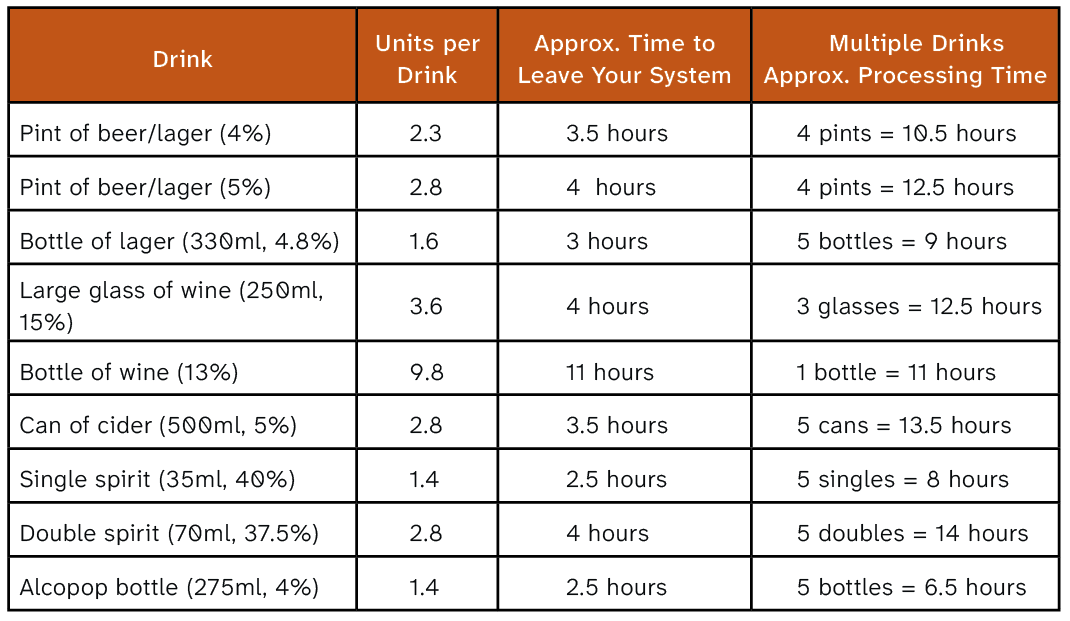
REMEMBER: Any amount of alcohol can affect your ability to drive safely. The NHS recommends not regularly drinking more than 14 units of alcohol per week, spread over three or more days, with several alcohol-free days each week. Times shown are approximate and intended as a general guide only.
Need Support With Alcohol?
Drinkline: Free, confidential alcohol advice. 0300 123 1110 Weekdays 9am–8pm, Weekends 11am–4pm.
NHS Alcohol Support: Speak to your GP or search for local alcohol addiction support services. www.nhs.uk
Alcohol Change UK: Information, advice and tools to help you understand your drinking. alcoholchange.org.uk
Alcoholics Anonymous GB: Support for anyone who wants to stop drinking. 0800 917 7650 alcoholics-anonymous.org.uk
WithYou: Free, confidential drug, alcohol and mental health support in England and Scotland.www.wearewithyou.org.uk