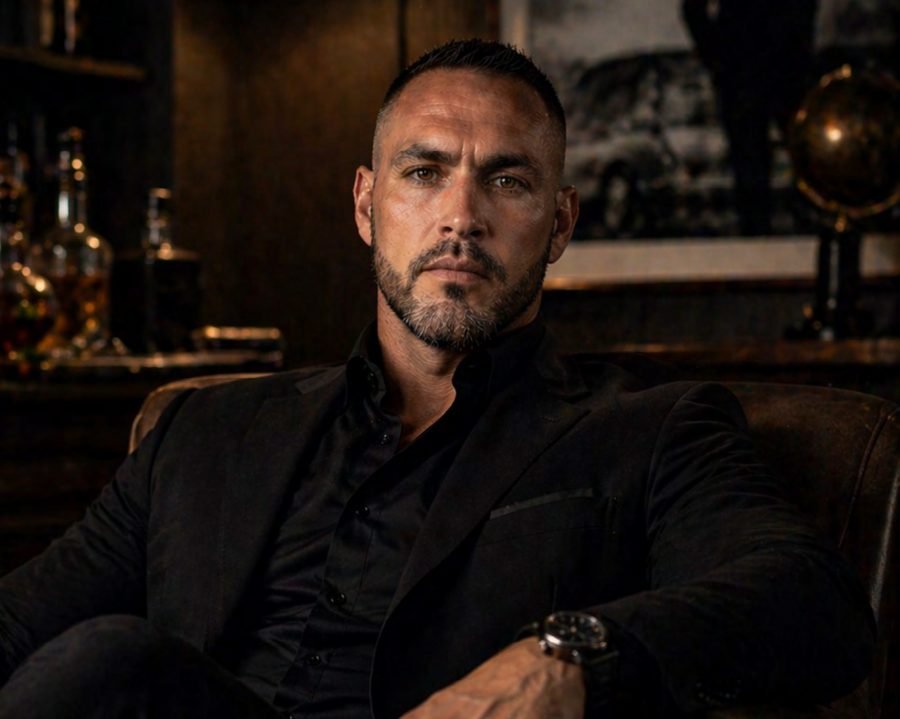
The invisible battle: why Dean Daniel is redefining strength through recovery
Columnist Dean Daniel on living with chronic pain and vasovagal episodes, learning that rest is recovery, and why you don’t have to be “cured” to make a difference.

By Power of Men editorial team
People see Dean Daniel and say, “You look great, Dean. You’re doing amazing things.” And he is. But what they see is only part of the story.
They don’t see the trauma a vasovagal episode can bring: the panic it causes his loved ones, the ambulance rides, the days lost to recovery. A vasovagal episode happens when the vagus nerve is overstimulated, causing a sudden drop in heart rate and blood pressure. It leads to fainting, and in Dean’s case it’s triggered by the constant back pain he lives with every day.
Rest isn’t weakness
For a long time, he hated rest. He hated lying in bed and felt his body had failed him. “I was an athlete. Sport, movement and training were my identity. Admitting I couldn’t do what I once could made me want to give up.”
But he has learned something important: rest isn’t weakness. Rest is recovery. “If I need three days in bed just to get one good day after, that’s okay. I’ve had to learn to be kinder to myself. Acceptance isn’t easy, but it’s necessary. You can’t heal if you’re constantly fighting yourself.”
The unseen reality of chronic pain and mental health
Living with chronic pain isn’t linear. It’s not something you “get over”. It’s something you learn to live with, one day and one breath at a time. Every day, Dean faces two battles: the physical pain, and the mental toll that follows.
His back pain is constant: sometimes sharp, sometimes dull, sometimes unbearable, but always there. On good days he can get up, stretch, maybe listen to music. On bad days, even with medication, he can’t get out of bed.
Physical pain doesn’t exist on its own. It feeds the mental struggle. Pain brings frustration. Frustration brings anxiety. And suddenly you’re spiralling into dark places you’ve fought hard to stay out of.
Real day-to-day survival tools
- Cold water therapy: “It’s brutal, no point pretending otherwise. But when I step into freezing water, everything else switches off. I’m just surviving the next minute and, weirdly, that gives me strength.”
- Meditation: quieting the anxiety when things spiral. Not pretending everything is fine, but finding calm in the chaos.
- Music: a reminder that there is still joy, still life, still something worth holding on to.
- And on some days, medication or complete silence.
The ripple effect
One of the hardest things Dean has learned is how deep the ripple effect of suicide goes. “When I was at my lowest, I didn’t realise the choices I was considering could impact so many people.”
One death by suicide affects, on average, 135 people. Children who lose a parent to suicide are three times more likely to die by suicide themselves.
“That reality hits hard. I’m reminded every day that speaking up, staying and sharing my story matters. I’m not just protecting myself. I’m protecting my children, and maybe someone else’s too.”
Finding purpose
Now his purpose is speaking to groups, recording podcasts and running men’s mental health sessions. “I don’t do it because I’m ‘fixed’. I do it because I know what it’s like to feel broken.”
- You don’t have to be “cured” to make a difference.
- You don’t have to be pain-free to find peace.
- You don’t need all the answers to offer hope.
“Talking helps me. Helping others helps me. Being honest about the dark days helps me. No matter what challenges come my way, I am, and always will be, Unbeaten.”
Dean Daniel is a Power of Men columnist.
From the February 2026 issue of Power of Men, pages 26 to 27.
Need to talk?
Samaritans: 116 123, free, any time
Text SHOUT to 85258
NHS: 111
Emergency: 999
The Power of Men Advisory Board consists of a multi-disciplinary panel of experts in psychology, physical health, and accessibility design, ensuring every article is grounded in clinical evidence and neuro-inclusive standards. Meet the Advisory Board.
Need to talk?
Samaritans: 116 123, free, any time
Text SHOUT to 85258
NHS: 111
Emergency: 999
Get the monthly briefing